Rise to a medieval metropolis
The history of Naumburg is inextricably linked to the Ekkehardines, who moved their ancestral seat to the Saale in the 11th century. With the founding of the diocese in 1028, the settlement grew rapidly into a spiritual and economic center. Naumburg Cathedral, now a UNESCO World Heritage Site, still bears witness to this glorious era. Parallel to the establishment of the clergy, a Jewish community developed early on, which, as part of the city’s commercial structure, helped drive its rise to become an important long-distance trading city.
Naumburg as a city of fairs and markets
In the late Middle Ages and early modern period, Naumburg increasingly emancipated itself as a trading center. At times, the Naumburg trade fair was considered one of the most important in central Germany, directly competing with Leipzig. While the town flourished through trade in cloth and wine, the social fabric was also characterized by religious tensions. This led to the expulsion of the Jewish citizens at the end of the 15th century – a turning point after which Naumburg was primarily characterized by its Christian bourgeois trade and administration for centuries.
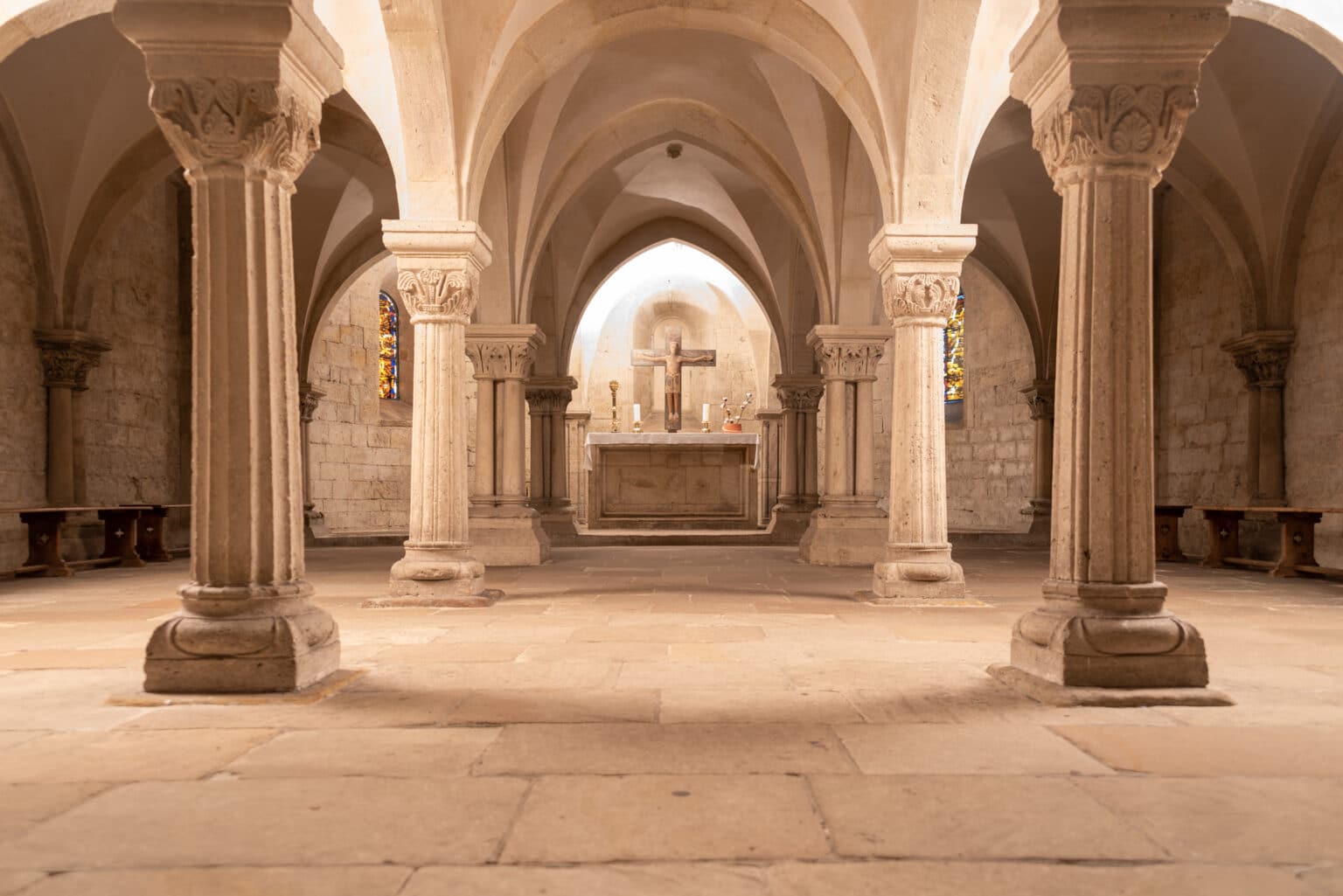
Die dreiteilige Hallenkrypta unter dem Ostchor des Naumburger Doms zeigt massive spätromanische Kreuzgratgewölbe, die auf kräftigen Säulen ruhen. Der um 1160/70 errichtete Raum des frühromanischen Vorgängerbaus wurde in den Domneubau ab 1210 integriert. Das einfallende Licht der kleinen Rundbogenfenster beleuchtet die kunstvollen Pflanzenkapitelle und das zentrale, um 1220 geschaffene romanische Holzkruzifix.
Residential city, Prussian rise and bourgeois prosperity
After the Thirty Years’ War, Naumburg developed into the magnificent residence of the Duchy of Saxony-Zeitz, which still characterizes the baroque townscape with its noble town houses today. With the transfer to Prussia in 1815, the town consolidated its role as an administrative center, with legal liberalization allowing Jewish families to move in. As entrepreneurs and bankers, they were instrumental in driving the industrial boom of the Wilhelminian era and became a mainstay of civic and social life in the city.
Ruptures of modernity and the path to World Heritage status
The 20th century marked a painful break when the National Socialists tore apart the social fabric and systematically destroyed the Jewish community. While the architecture survived the wars, the substance suffered from neglect in the GDR era until the Peaceful Revolution of 1989 brought about a change. Today, Naumburg presents itself as a living World Heritage Site: the renovated old town and the cathedral attract worldwide interest, while stumbling blocks and memorial plaques are a holistic reminder of the city’s diverse and at the same time cautionary history.
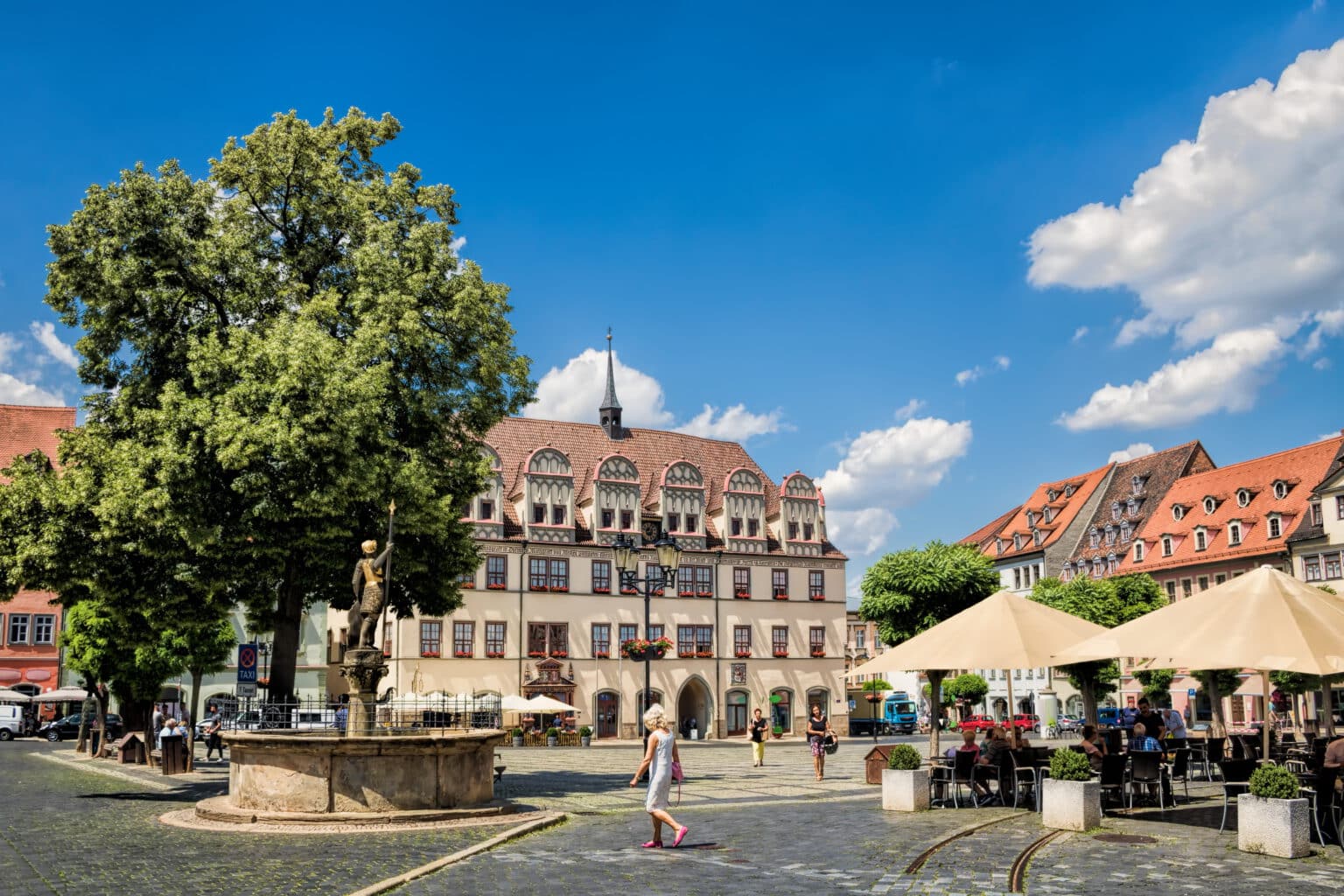
Der sanierte Marktplatz begeistert heute als historisches Herzstück mit prachtvollen Renaissance- und Barockfassaden. Rund um das markante Rathaus laden gemütliche Cafés zum Verweilen im geschlossenen architektonischen Ensemble ein. Aufwendig restauriertes Pflaster und alte Patrizierhäuser machen ihn zu einem der schönsten Plätze Mitteldeutschlands.
Traces of Jewish life in Naumburg: from flourishing to extinction
Medieval settlement and community building
In the early 15th century, Naumburg experienced its first Jewish heyday. From 1410, 22 families received the right to live there in return for payments and built up a community with its own synagogue. The importance of this community was so great that the council even invested considerable funds in the repair of the Jewish buildings in 1489. Despite this structural support, the legal position remained precarious, as the right of residence had to be constantly renegotiated. However, this era of coexistence came to an abrupt end as a result of sovereign intervention, which permanently shook the foundations of Jewish identity in the region.
The expulsion and the centuries-long ban
The year 1494 marked a dark turning point when the Jewish population was expelled “for all eternity” at the instigation of the Saxon electors. In order to legally secure this exclusion, the council made a commitment to the bishop to replace the lost Jewish tax from its own funds in future. In the following centuries, Jewish life within the city walls was almost completely prohibited. It was not until the 19th century that this situation slowly softened, although the council still rejected settlement applications in 1842 with explicit reference to the medieval deeds of expulsion from 1494, which illustrates the deep roots of this exclusion.
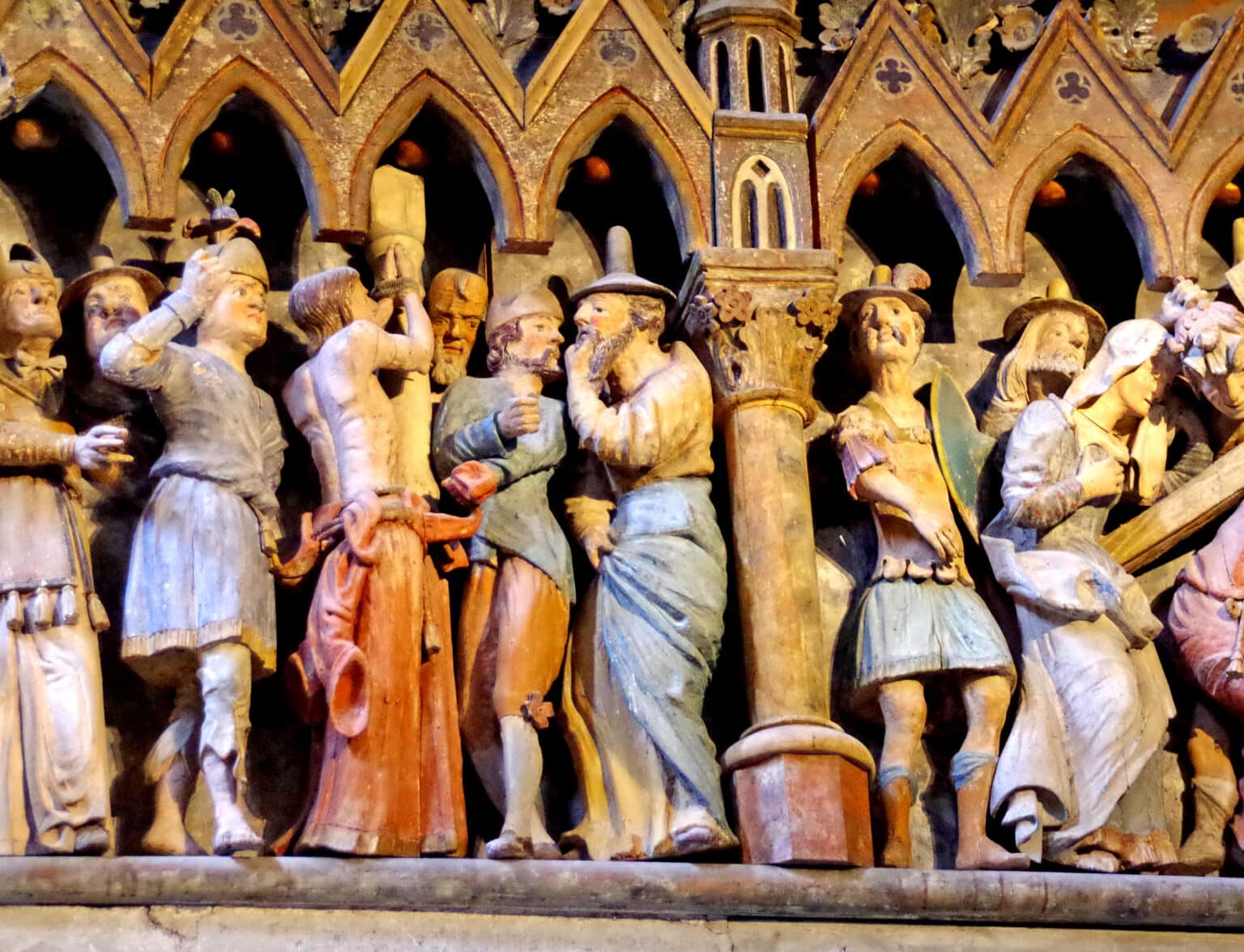
The relief on the west rood screen shows the payment of the blood money to Judas. The hateful facial expressions of the figures and their pointed Jewish hats reflect medieval anti-Judaism, which defamed Jewish people as greedy opponents of Christ.
Economic importance during trade fairs
Despite the ban on settlement, the economic power of Jewish merchants remained indispensable for the Naumburg trade fairs. In 1800, an impressive 800 Jewish carriages were counted, for which a provisional infrastructure with a synagogue servant and their own cook was created. This ambivalent relationship between economic dependence and religious exclusion was reflected in discriminatory special taxes. It was not until the pressure of modernity and Prussian reforms that the strict prohibitions were lifted. In 1858, the first Jewish resident finally settled permanently in Naumburg again, ending a centuries-long era of official exclusion.
Integration and advancement in the middle class
With legal equality in the German Empire, Jewish citizens became pillars of society. Renowned businesses such as those run by the Cohn and Groß families established themselves in Salzstraße and were highly regarded far beyond the city limits. The families saw themselves as proud Naumburgers and were deeply involved in the social fabric, for example by supporting the fire department or clothing needy families. At this time, integration seemed complete: Jewish fellow citizens were active club members and highly decorated war veterans of the First World War who, like Mr. Groß, were awarded the Iron Cross and were firmly rooted in civic life.
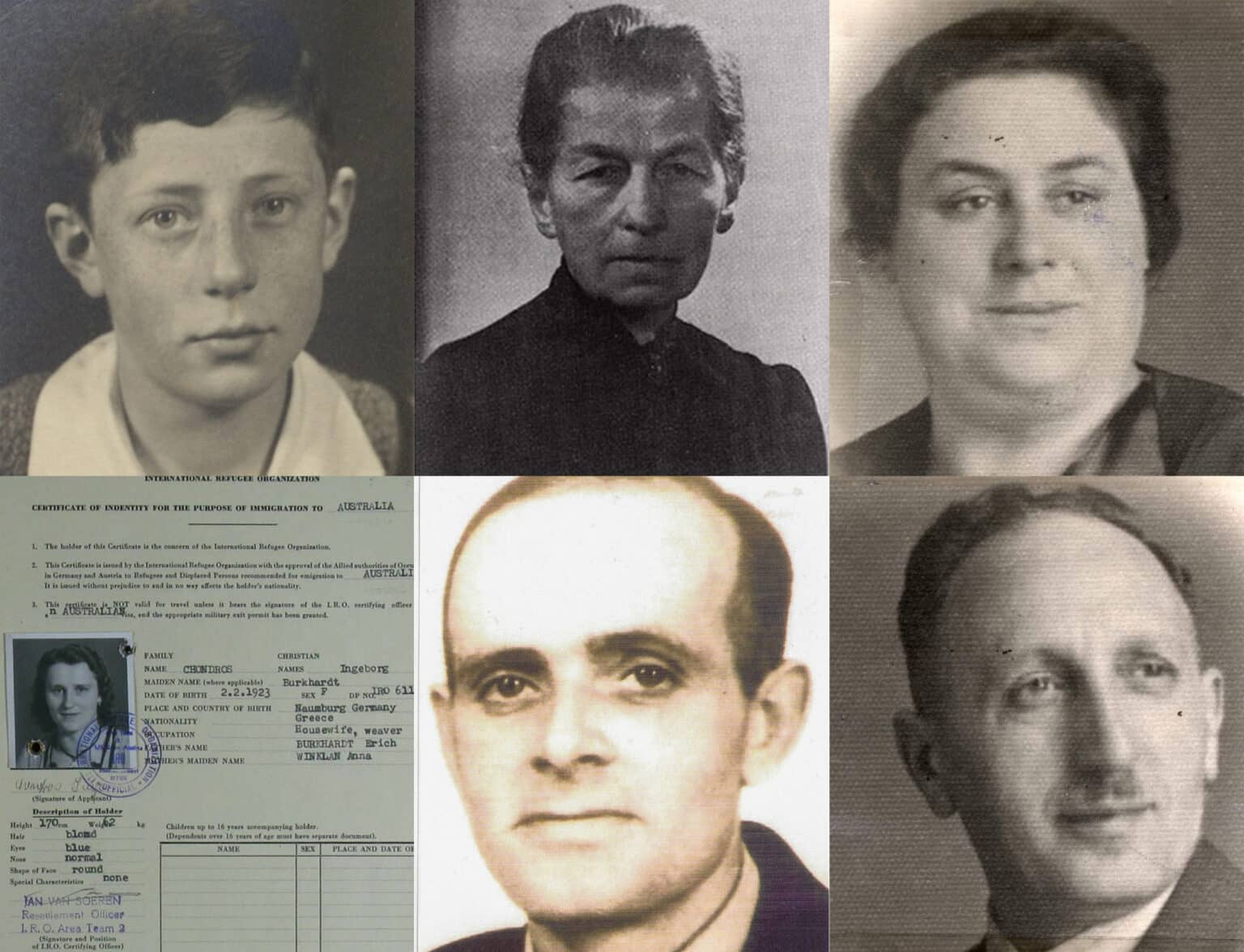
f.l.t.r.: Arved Klein, Elly Landsberg, Eva Gross, Ingeborg Chondros, Sally Kaden, Josef Salmonon Gross
Professional diversity and intellectual presence
The Jewish community was characterized by an impressive range of professions, ranging from retail to specialized wholesale businesses such as the Friedmann gut store or the Mannheimer family’s livestock business. The presence was also significant in the academic field: highly qualified lawyers such as Adolf Laubsborn shaped the profile of the “City of Law” as part of the intellectual elite. These men trusted in the rule of law of the German state for which they worked. They had no idea how radically the National Socialists would later turn this order into its opposite in order to destroy the economic and intellectual existence of the Jewish elite.
Terror and the end of the community
The Nazi takeover destroyed this life through systematic boycotts and violence. On Pogrom Night in 1938, Napola students demolished the stores in Salzstraße and abused even highly decorated veterans like Mr. Groß in front of their families. Those who were unable to flee were disenfranchised, herded into “Jewish houses” and eventually deported. This ended the centuries-long history of the Jewish community in Naumburg.