Insights into the knightly and agricultural tradition
The history of Rehmsdorf, located in the fertile Elster floodplain, is deeply rooted in the medieval settlement history of the region. First mentioned in documents in the 12th century, the village developed over the centuries as an important location for knightly landlordship. The prominent manor formed the economic and social heart of the village. Under the influence of various noble families, a traditional agricultural structure shaped the lives of the inhabitants, with the cultivation of the fertile soils of the Saale-Elster lowlands ensuring stable prosperity. The historic architecture of the estate and the layout of the village still bear witness to this long era, in which the combination of aristocratic administration and rural craftsmanship consolidated the identity of Rehmsdorf.
Change through industrialization and modern infrastructure
With the dawn of the industrial age in the 19th century, Rehmsdorf underwent a profound transformation that led the former farming village into the modern age. A decisive impulse was the connection to the railroad network, especially to the strategically important line between Zeitz and Altenburg. This new mobility not only made it possible to transport agricultural produce on a larger scale, but also facilitated the establishment of commercial enterprises that benefited from the proximity to the emerging lignite mining areas. Despite this economic modernization, the village retained its rural character. In the post-war period and during the GDR era, Rehmsdorf remained an important anchor point for regional supply, while the renovation of historic buildings today helps to bridge the gap between the chivalrous past and a contemporary quality of living in the Elsteraue.
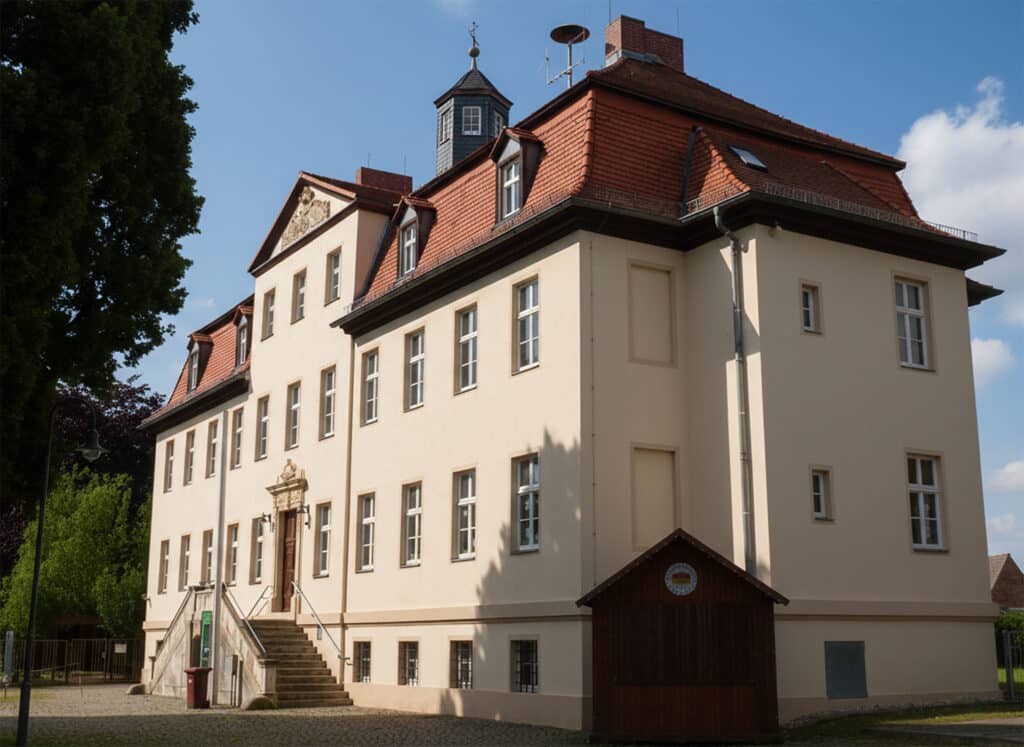
As the former economic and social center of the village, the manor house bears witness to the village’s long knightly tradition. After an eventful history, which is closely linked to the development of the Elsteraue, the building now houses the community center and the memorial, making it a central meeting place and a place of remembrance.
The Wille subcamp
Origin and strategic background
In June 1944, a subcamp of the Buchenwald concentration camp was set up under the code name “Wille”. The reason for this was the strategic importance of Braunkohle-Benzin AG (BRABAG) in Tröglitz. As the Allied air raids hit German fuel production hard, concentration camp prisoners were to be used as forced laborers to repair the destroyed hydrogenation plants and ensure the production of synthetic petrol for the Wehrmacht. Rehmsdorf thus became the scene of a close interweaving of arms industry interests and National Socialist terror.
Destroyed BRABAG-Zeitz works in Tröglitz. The plants were destroyed on May 12, 1944 in the course of an operation against the German hydrogenation industry.
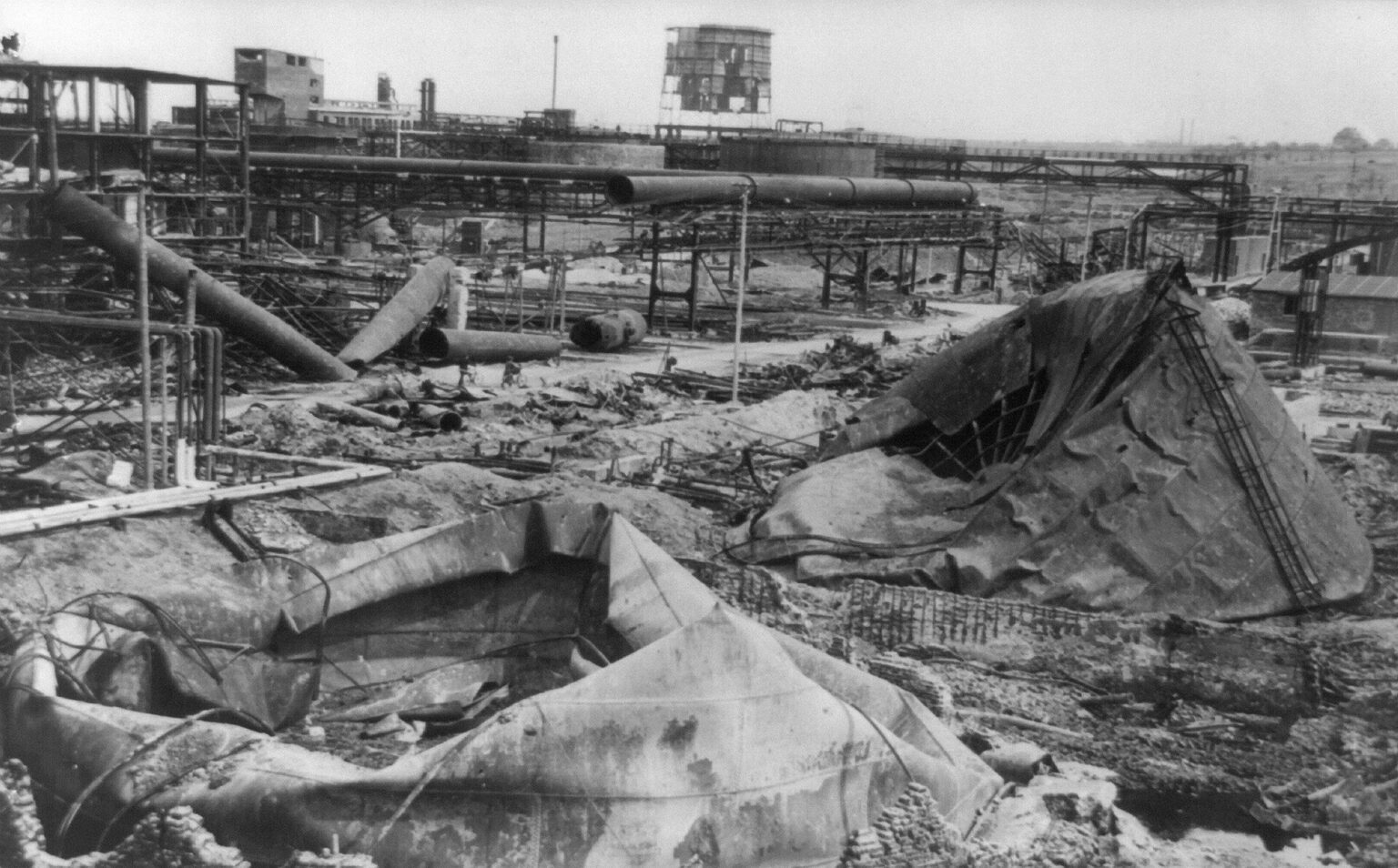
Destroyed BRABAG-Zeitz works in Tröglitz. The plants were destroyed on May 12, 1944 in the course of an operation against the German hydrogenation industry.
The prisoner structure and origin
The more than 8,600 prisoners who passed through the camp during its existence were predominantly Jewish men and young people. The majority of them came from Hungary and had previously been deported to Buchenwald via the Auschwitz-Birkenau extermination camp. As Buchenwald was no longer supposed to accommodate Jewish inmates at this time, the “Wille” command marked a radical change: The Jewish prisoners were now deliberately brought back to the Reich territory in order to keep the chemical industry’s “miracle weapons” running under murderous conditions.
Reconstructed prisoners’ accommodation at the Rehmsdorf memorial site.
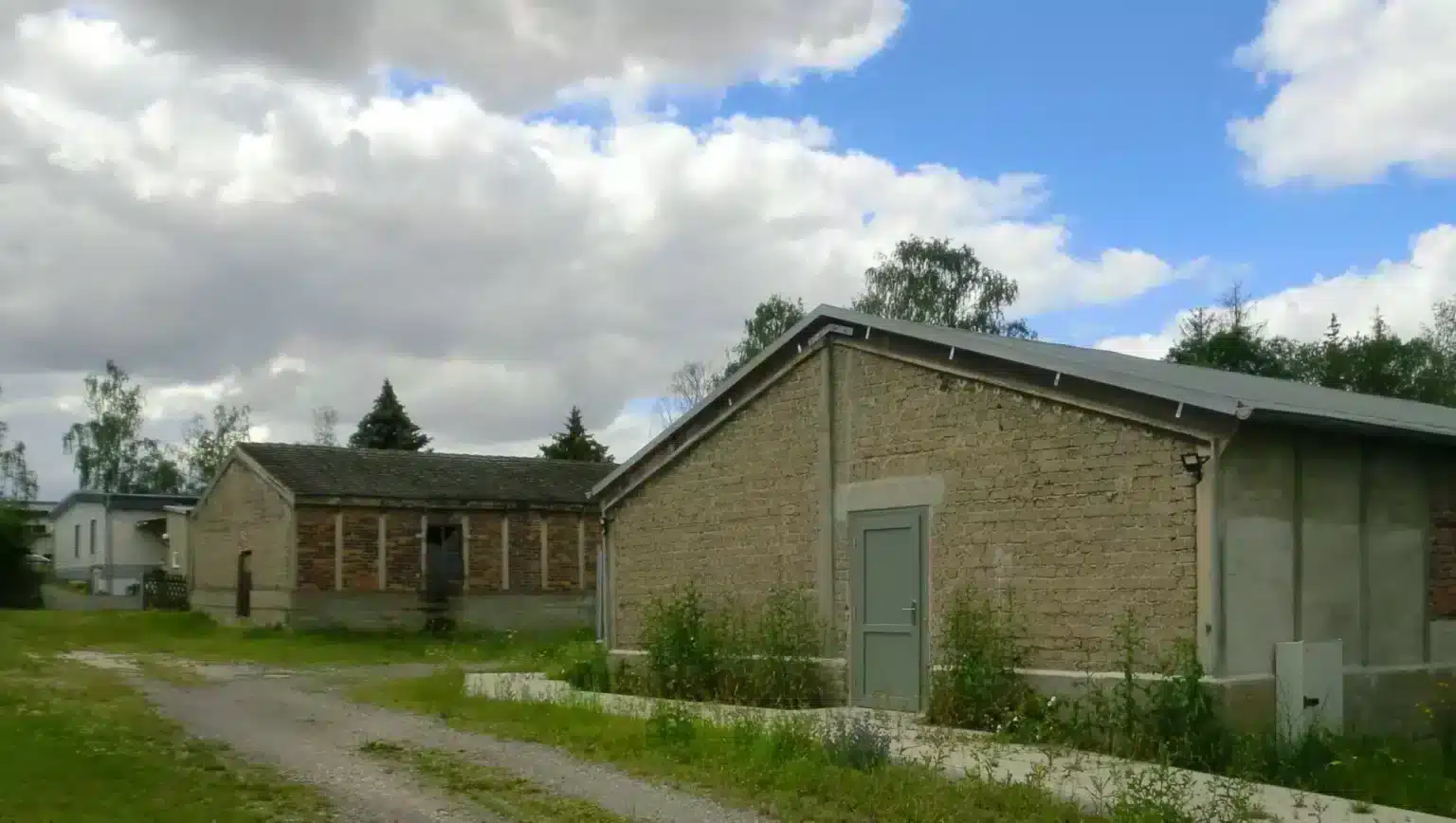
Reconstructed prisoners’ accommodation at the Rehmsdorf memorial site.
From Gleina to Rehmsdorf
The camp was not a static location, but was divided into different phases. Initially, the prisoners were housed in empty buildings in Gleina and later in a tent camp in Tröglitz, not far from the BRABAG works. It was not until the winter of 1944/45 that they were transferred to the barracks at Rehmsdorf station. These locations were characterized by a deliberate neglect of the infrastructure; the people were often defenceless against the weather conditions, which further minimized their already low chances of survival.
Destruction through work at BRABAG
The prisoners were deployed according to the principle of “extermination through work”. The men had to perform extremely hard physical labor – from unloading coal trains to defusing unexploded bombs after air raids. They often worked more than twelve hours a day, without sufficient protective clothing or adequate food. The brutality of the SS guards and the constant fear of selection made the work a daily struggle for survival, in which weakness often meant a death sentence.
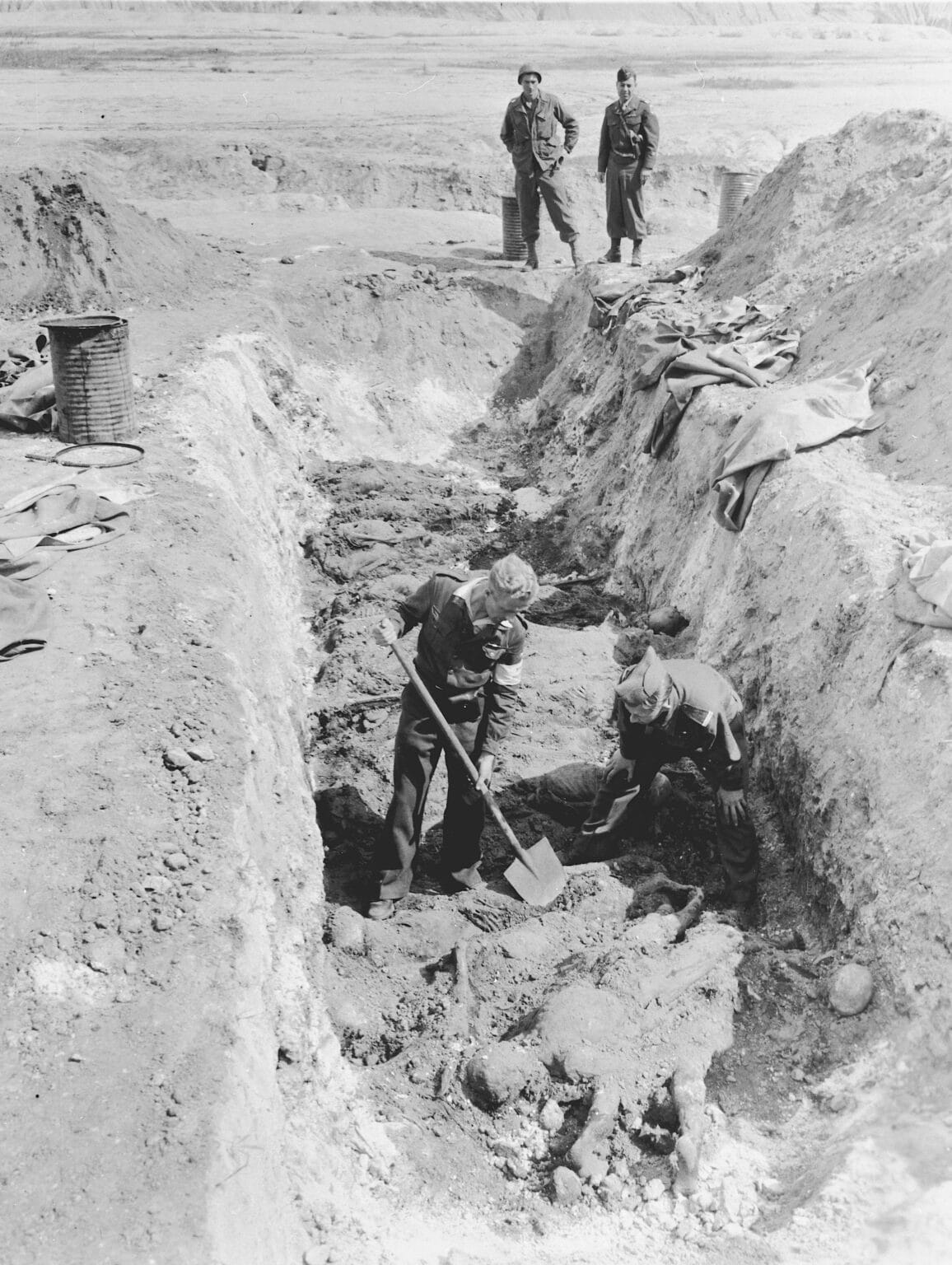
Under US supervision, German civilians exhume 400 bodies from a mass grave near Zeitz. A former Dutch prisoner had reported the grave in June 1945. The victims were male prisoners of the Tröglitz camp (Buchenwald subcamp) who performed forced labor for Brabag. They could usually only be identified by the numbers on their ragged clothing. According to local residents, they were buried shortly before the US army arrived.
Between deprivation and violence
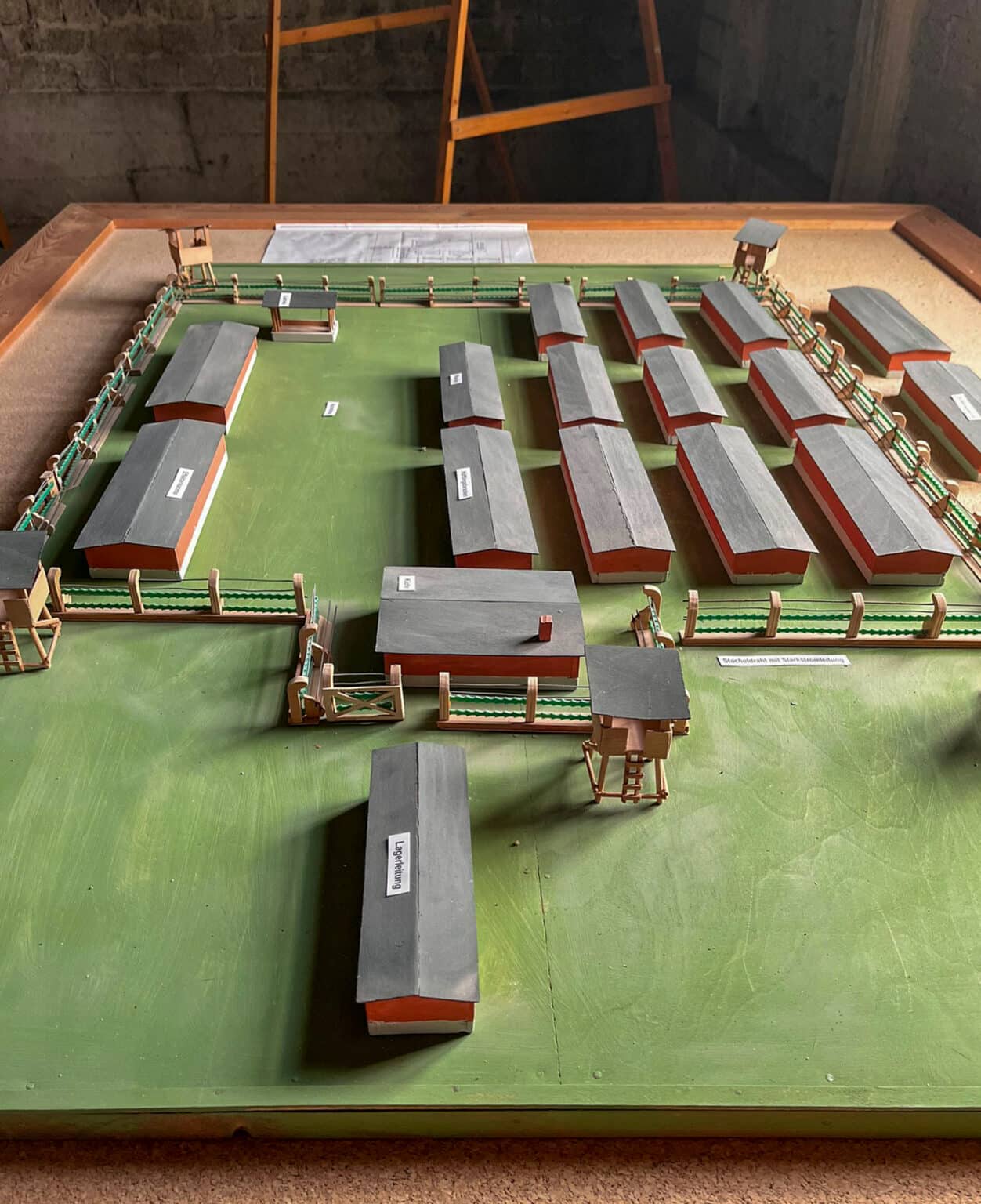
The camp grounds at Rehmsdorf station were laid out as a strict hierarchical system that ensured total surveillance of the prisoners. The core consisted of six massive accommodation barracks and a military hospital, which were hermetically sealed off from the surrounding area by a double barbed wire fence. While the service buildings, such as the kitchen, were centrally located within the prisoner zone, the SS guard quarters and the commandant’s office were located at a distance to ensure constant visual surveillance of the roll call area. The direct connection to the railroad tracks also made it possible to efficiently transport the forced laborers to the BRABAG hydrogenation plants on a daily basis.
The end and the death march
In the face of the approaching US army, the Rehmsdorf camp was evacuated at the beginning of April 1945. What followed was a cruel death march in the direction of the Theresienstadt concentration camp. The weakened prisoners were herded through the Ore Mountains in open freight cars or on foot. Those who collapsed from exhaustion were murdered by the SS. Of the more than 8,000 original prisoners of the “Wille” commando, less than a third survived the catastrophic conditions and the final evacuation.
The memorial
Location and content concept of the memorial
The Rehmsdorf memorial is located in the local community center and serves as the community’s central historical memory. The modern permanent exhibition documents the history of the “Wille” subcamp from 1944 to 1945, using original documents, photographs and a detailed model of the camp to make the connection between BRABAG’s regional armaments industry and the Nazi terror tangible for visitors. The institution shows the cruel mechanisms of extermination through labor in a scientifically sound manner.
As a living place of learning, the memorial firmly integrates remembrance into today’s community life. It makes the spatial dimension of terror visible in the communal center. In this way, the memory of the victims remains a permanent part of the local identity in the Elsteraue.
Biographical remembrance and the role of contemporary witnesses
One focus of the work is on reconstructing individual lives in order to restore the identity of the victims behind the prisoner numbers. The focus is on Jewish men and young people, such as the Nobel Prize winner Imre Kertész, who were deported from Hungary to Rehmsdorf. The collection of testimonies and reports from the survivors makes it possible to preserve the individual fates in the collective memory and to convey the human impact of the Holocaust beyond abstract numbers.
This biographical commemoration actively counteracts the former National Socialist dehumanization. Through a personal connection, visitors understand the effects of camp logistics on an emotional level. The memorial thus preserves the dignity of those persecuted for future generations.
Educational work and regional networking
The political and historical educational work builds a bridge to today’s society. In cooperation with regional associations, the memorial offers project days and guided tours aimed specifically at young people. The educational work explains the mechanisms of exclusion and totalitarian rule in order to encourage reflection on values such as civil courage. In this way, Rehmsdorf makes an important contribution to democracy education and ensures that the local crimes of the Nazi era remain in the public consciousness.
The institution also acts as an archive and hub within a network of various places of remembrance in Saxony-Anhalt. The continuous documentation and care of memorials ensures the exchange of knowledge. In this way, the regional culture of remembrance remains a dynamic and scientifically up-to-date institution.